
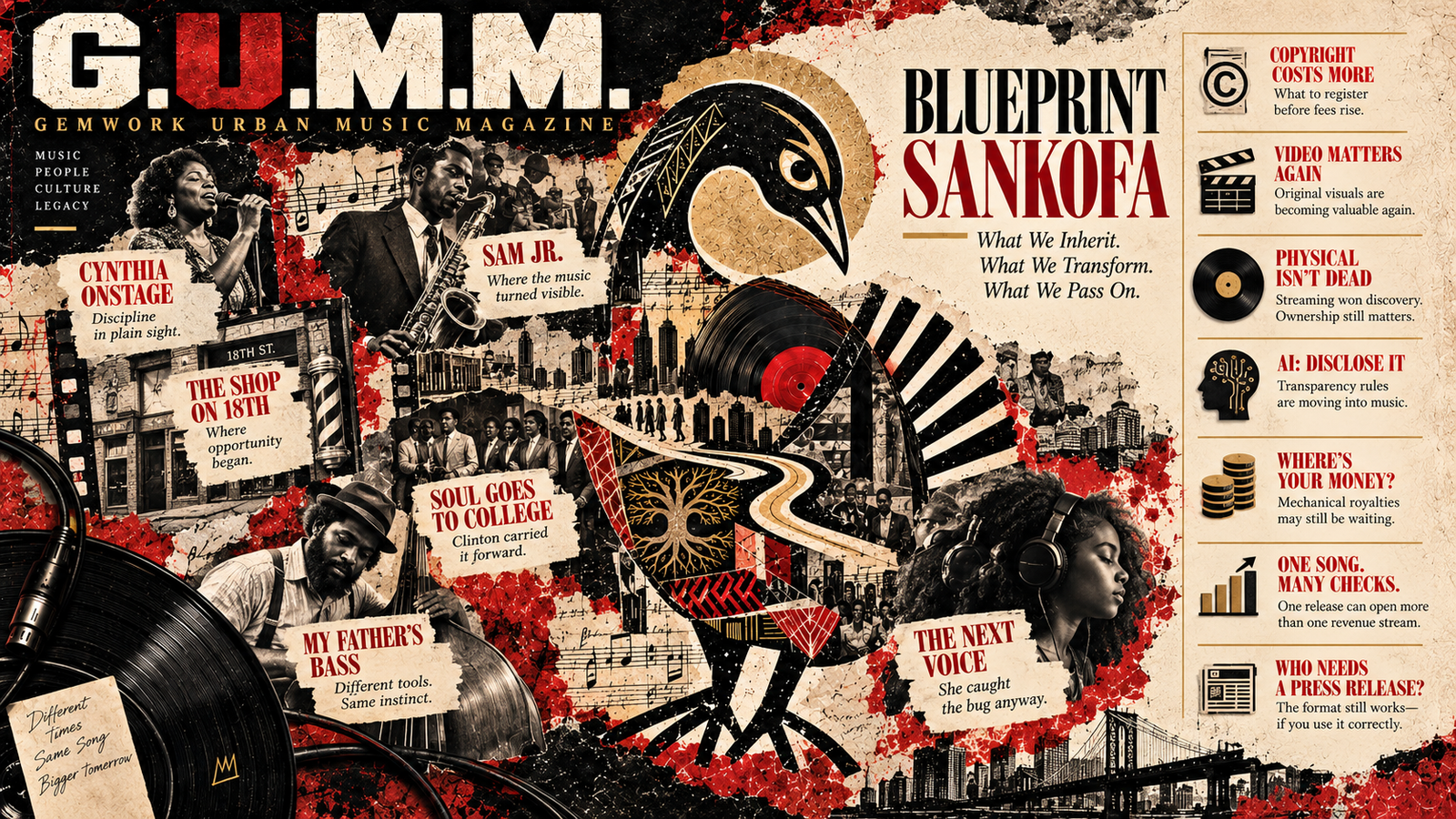
Where the music turned visible.
Samuel M. Utterbach Jr. represents the point where family history becomes more visibly connected to Kansas City jazz.
His story belongs in this issue not simply because of a name or a relationship, but because it shows how musical life is built inside a city. Jazz history is often presented through its most famous performers. Underneath that headline history is a network of working musicians, ensembles, bandleaders, arrangers, venues and local institutions.
The connection to George E. Lee’s orchestra places Sam Jr. inside that wider Kansas City musical ecosystem. It reminds us that a musician’s importance cannot be measured only by whether a later generation remembers every recording. Participation itself matters. Being part of an orchestra, a working band or a regional scene means contributing to a living system.
Kansas City’s jazz culture developed through movement: musicians moving between bands, neighborhoods and venues; ideas moving between generations; arrangements moving from paper to rehearsal to performance. A young musician could learn by listening, watching, repeating and surviving the demands of professional work.
That model remains relevant now.
Independent artists talk constantly about building a career, but careers are rarely built by isolated talent. They are built through scenes. Somebody shares a bill. Somebody recommends a player. Somebody teaches a part. Somebody keeps a venue open. Somebody preserves a record or remembers who was there.
Sam Jr.’s place in the blueprint is therefore about visibility. The earlier generation created a foundation; the musician made the musical language more visible through participation and performance.
The details of family history deserve documentation rather than exaggeration. Orchestra names, dates, personnel and locations should be checked against newspapers, archives, census records, photographs, recordings and institutional collections. Each verified detail strengthens the story.
But even before every document is found, the larger lesson is clear: music history is made by people who show up repeatedly enough for a scene to recognize them.
G.U.M.M. Move: Build a timeline for the musician in your family. List ensembles, cities, venues, collaborators and surviving evidence. Treat every local connection as part of the history, not as a footnote.

 Los Angeles | Redlands | Phoenix | Memphis | NYC
Follow us: @GemworkTV | Contact: info@gemwork.tv
Los Angeles | Redlands | Phoenix | Memphis | NYC
Follow us: @GemworkTV | Contact: info@gemwork.tv