
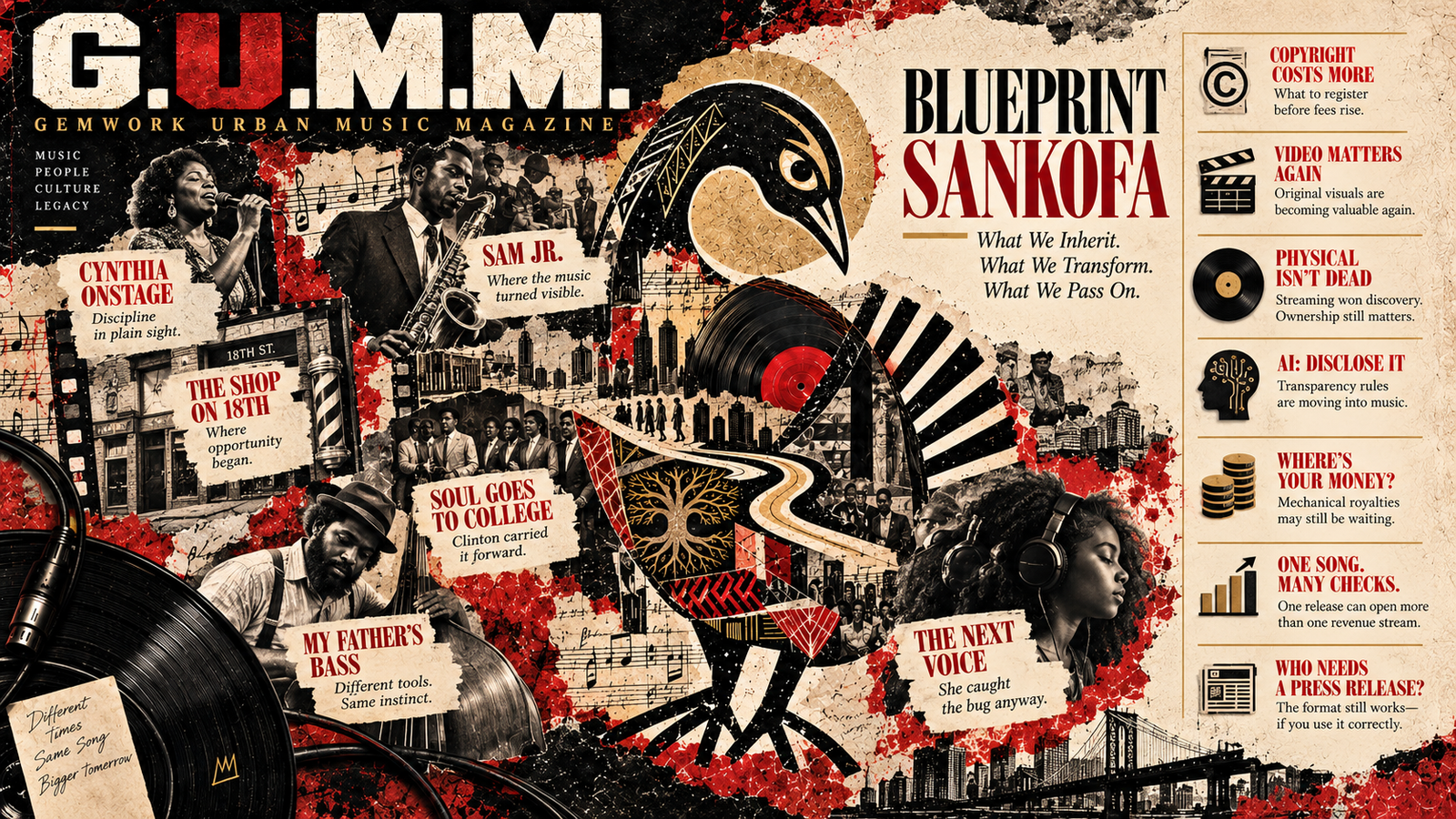
Where opportunity began.
Before a family can be described as having a creative legacy, somebody usually had to create the conditions that made creativity possible.
For the Utterbach family story, one of those points of origin is connected to Samuel M. Utterbach Sr. and a business on East 18th Street in Kansas City.
The shop matters because it represents more than a location. A neighborhood business is a declaration that somebody intends to remain, serve people, build trust and create a future with the resources at hand. It is a form of authorship.
The popular version of creative history often skips this part. We remember the musician onstage, the recording, the photograph or the finished work. We do not always remember the rent, the tools, the transportation, the relationships and the daily discipline that made the work possible.
A shop can become a kind of first studio. It teaches timing, customer knowledge, presentation, negotiation and the difference between an idea and a working operation. Those lessons travel. They can influence how later generations understand music, entrepreneurship and self-direction.
That is what makes the 18th Street story part of Blueprint Sankofa. The creative blueprint did not begin with a microphone. It began with initiative.
The shop also points to a broader truth about Black creative history in American cities: business and culture have always been connected. Barbershops, restaurants, clubs, record stores, churches, newspapers and family enterprises have served as informal cultural institutions. They were places where information moved, talent was recognized and younger people saw adults making something out of their circumstances.
We should be careful with family history. Names can be spelled differently in records. Addresses can change. Memories can compress time. Good storytelling does not mean pretending uncertainty does not exist. It means identifying what is known, marking what still needs verification and preserving the questions for the next researcher.
The shop on 18th is therefore both a story and an invitation: look beneath the visible art for the invisible infrastructure.
G.U.M.M. Move: Identify the first business, workplace or community institution connected to your creative family history. Find the address, collect the documents and ask what opportunity that place created for the next generation.

 Los Angeles | Redlands | Phoenix | Memphis | NYC
Follow us: @GemworkTV | Contact: info@gemwork.tv
Los Angeles | Redlands | Phoenix | Memphis | NYC
Follow us: @GemworkTV | Contact: info@gemwork.tv