
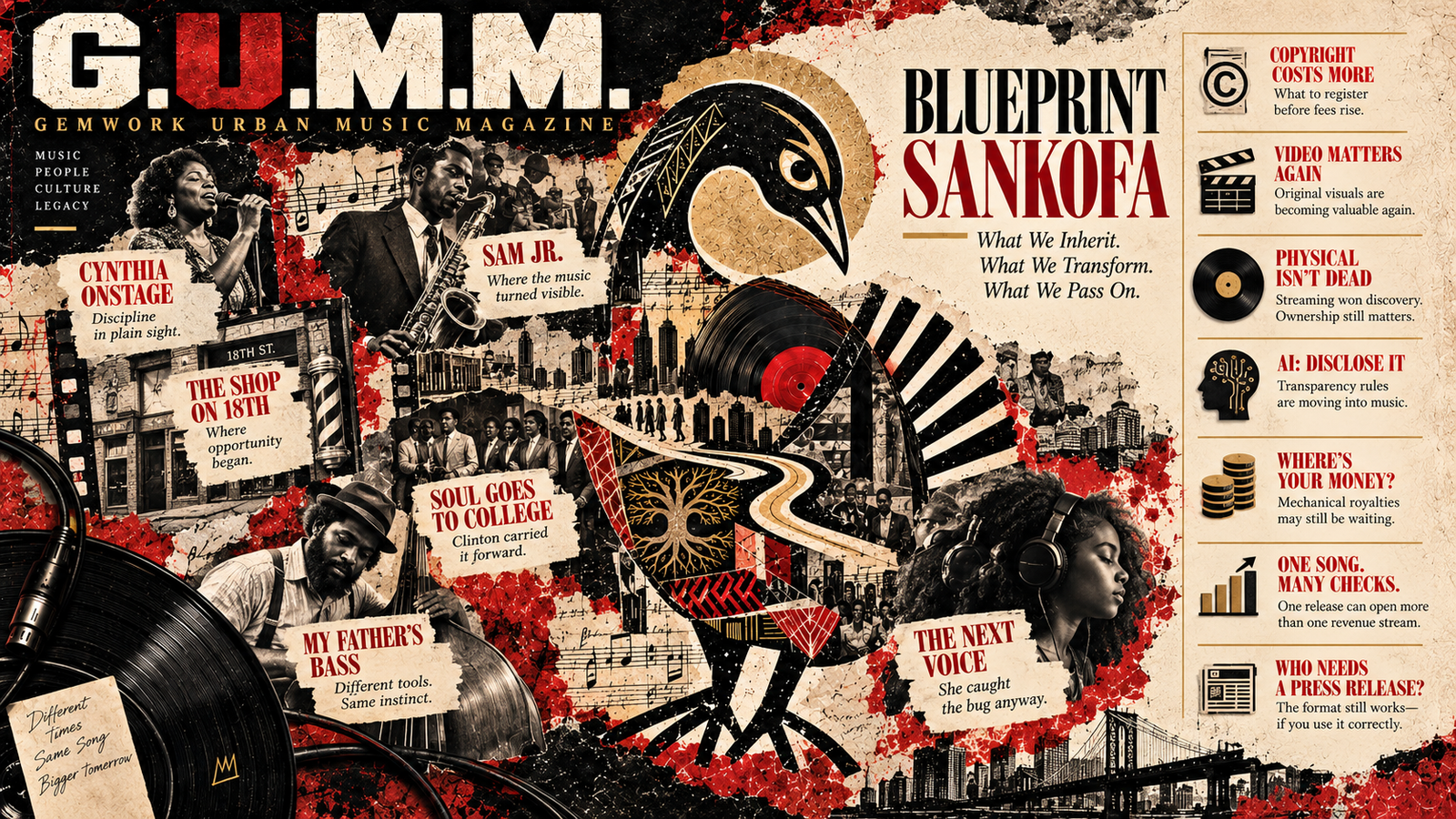
Transparency rules are moving into music.
The AI conversation in music is moving past one question.
“Can we make this?”
The next question is becoming:
“What do we have to tell people about how it was made?”
Article 50 of the European Union’s AI Act began applying on August 2, 2026. The new transparency framework covers several situations involving interactive AI systems, AI-generated or manipulated content, deepfakes and machine-readable marking.
That does not mean every hi-hat touched by software needs a warning label.
The rules are more specific than that.
Providers of certain AI systems have obligations around informing users when they are interacting with AI and around adding machine-readable marks to generated or manipulated content. Deployers have disclosure duties in areas including deepfakes and some AI-generated material involving matters of public interest.
For music businesses, this matters because a modern release is bigger than the audio master.
It can include:
- cover art,
- music videos,
- synthetic vocals,
- avatars,
- promotional photography,
- lyric videos,
- translated performances,
- artist likenesses,
- social campaigns.
An artist may be operating in the United States while distributing globally. A label may use tools built by companies in another jurisdiction. Content can cross borders instantly.
The most practical response is not fear.
It is documentation.
Keep records of what tools were used. Save source files. Know whether a voice was synthetic, cloned or simply processed. Know whether an image contains a real person whose likeness has been substantially altered. Know what the distributor or platform asks you to disclose.
Most importantly, separate “AI-assisted” from “AI-generated” in your own thinking.
Using an AI noise-removal tool is not the same creative act as generating a singer who never existed. Using machine learning to isolate stems is not the same as cloning another artist’s voice. The details matter.
Transparency is likely to become part of metadata culture whether or not every territory adopts identical rules.
That can actually help independent artists.
A creator who can clearly explain what was made, what was generated, what was licensed and what was performed has a cleaner chain of provenance.
In the next phase of digital music, provenance may be as important as production quality.
G.U.M.M. Move: Add an AI-use field to your internal release checklist now: tool, asset, purpose, source material, permissions and disclosure requirement.

 Los Angeles | Redlands | Phoenix | Memphis | NYC
Follow us: @GemworkTV | Contact: info@gemwork.tv
Los Angeles | Redlands | Phoenix | Memphis | NYC
Follow us: @GemworkTV | Contact: info@gemwork.tv