
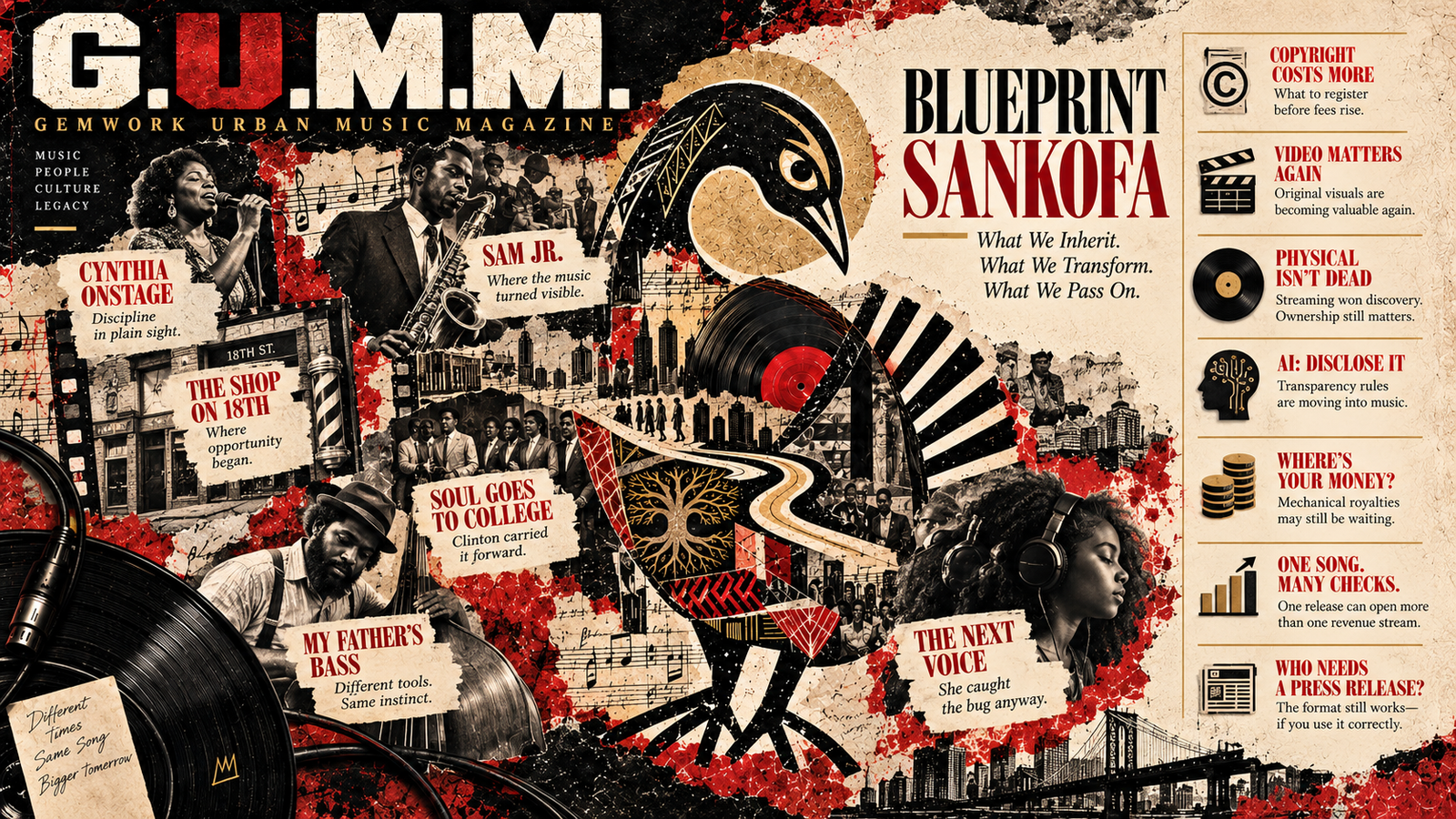
One release can open more than one revenue stream.
Independent artists ask the wrong question all the time.
“How much does Spotify pay?”
That is worth understanding.
But it is a small question compared with:
“How many businesses can one song enter?”
Imagine you release one independent single.
The master goes to streaming services.
The composition is registered with the appropriate rights organizations.
A clean version goes into the DJ pool.
An instrumental is prepared for sync.
The song becomes part of the live show.
A performance video goes to YouTube.
A limited physical version gets sold directly.
The cover becomes a shirt.
The stems become useful for a remix.
The story behind the record becomes editorial content.
The same recording has now moved through multiple commercial environments without becoming seven different songs.
That is the point.
One song can create multiple assets.
The master
The recorded performance itself is an asset. Distribution, neighboring rights where applicable, licensing and direct sales can all connect to it.
The composition
Songwriting is its own asset. Performance royalties, mechanical royalties and synchronization can involve the underlying musical work separately from the master recording.
The visual
A music video can create advertising revenue, social clips, still photography and promotion while increasing the useful life of the release.
The physical object
Vinyl, CDs, cassettes and limited packages can turn an infinitely streamable file into something finite.
The live version
A song performed onstage can sell tickets, deepen the audience relationship and sometimes become a separate recorded product.
Sync
The original master, alternate mix, instrumental and stems can make a song more usable for film, television, games, advertising and other licensed media.
Direct fan business
Bundles, signed products, memberships, private releases and fan experiences are not “extra” if the artist plans them from the beginning.
None of these revenue streams is automatic.
That is important.
A song does not become profitable because somebody made a checklist with fourteen boxes. Every channel has costs, rights requirements and an audience question.
But thinking in systems changes the release conversation.
Instead of asking how many streams you need to survive, ask what you built around the record.
Streaming can still be the front door.
It just should not have to be the whole house.
G.U.M.M. Move: For the next release, build the asset map before release day: master, instrumental, clean, performance video, artwork, physical option, sync metadata, direct-sale offer and live use.
Sources
- CD Baby September 24, 2026 newsletter, “How many revenue streams do you have?”
- The MLC

 Los Angeles | Redlands | Phoenix | Memphis | NYC
Follow us: @GemworkTV | Contact: info@gemwork.tv
Los Angeles | Redlands | Phoenix | Memphis | NYC
Follow us: @GemworkTV | Contact: info@gemwork.tv