
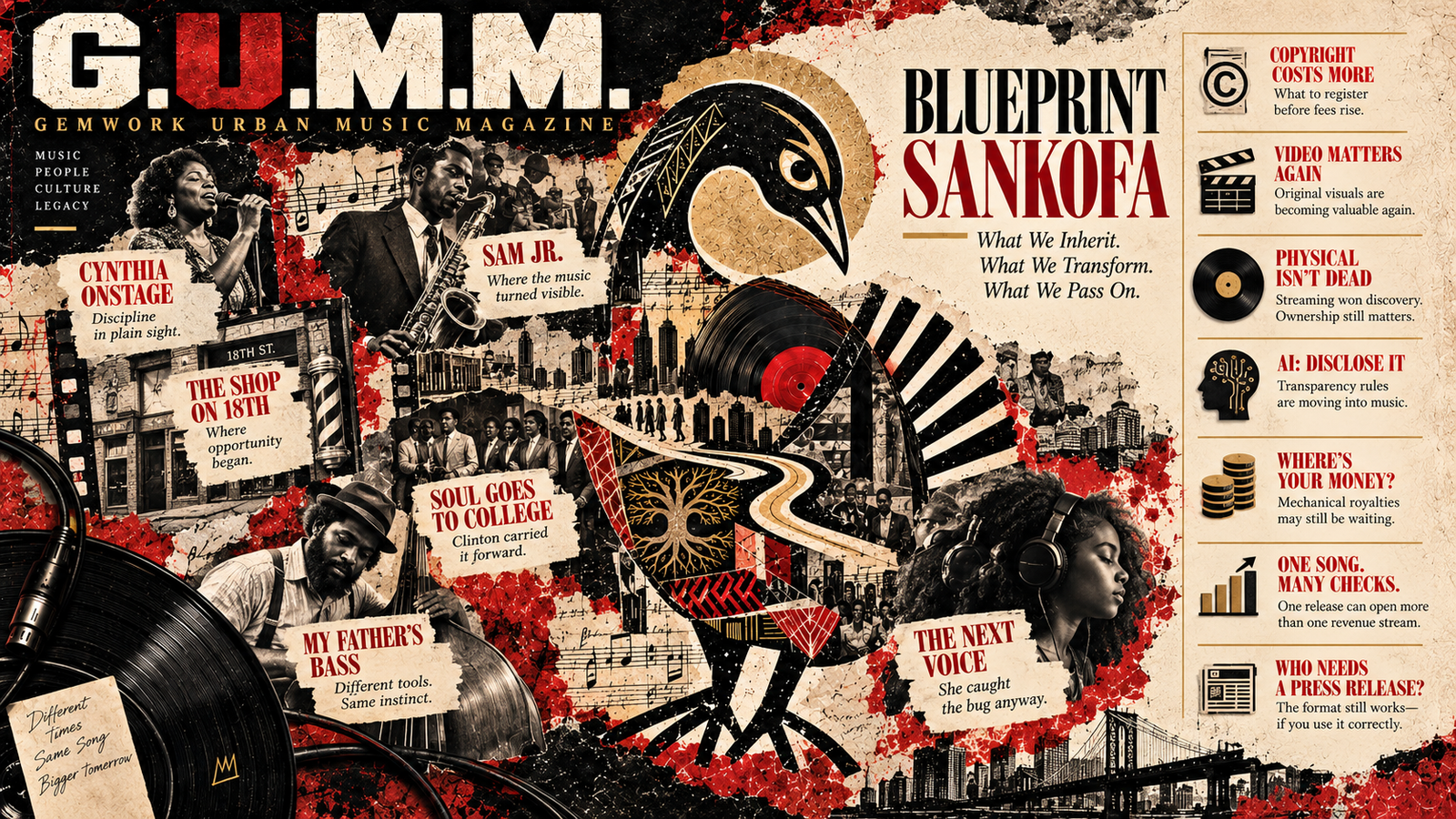
Original visuals are becoming valuable again.
For a while, music videos started to feel like expensive attachments to songs.
Then every artist became a content producer.
Now we live in a flood of vertical clips, lyric snippets, performance fragments, AI images, behind-the-scenes footage and short-form edits. There is more visual content around music than ever.
That is exactly why a real visual idea matters again.
The difference is not necessarily budget. It is intention.
A music video can still do something a ten-second clip rarely does: establish a world. It can tell us how the artist sees the record, what the characters look like, what the environment feels like, what the symbols mean and what the audience should remember when the song stops.
That world can be handmade. It can be animated. It can be one room, one performance, one continuous take or one strange idea executed well.
The Recording Academy and major video awards still separate disciplines such as direction, cinematography, editing, art direction and visual effects for a reason. The strongest videos are collaborations between music and filmmaking, not simply advertising around an audio file.
For independent artists, the economics have changed too.
One strong video can become:
- the full YouTube piece,
- multiple vertical edits,
- still photography,
- thumbnails,
- teaser loops,
- press assets,
- behind-the-scenes clips,
- visualizers,
- social headers,
- tour-screen content.
That makes a video less like a single marketing expense and more like a source library.
The trap is creating twenty disposable pieces because the platforms told you to stay active.
Activity is not identity.
When everybody can generate something quickly, work that feels considered becomes easier to recognize.
The question for an artist is no longer, “Can we afford a big video?”
It is, “What visual idea belongs to this song?”
That question is much more useful.
A warehouse performance can work if the lighting, framing and performance are specific. Stop-motion can work because the texture becomes part of the song. A narrative can work without celebrity cameos. A visualizer can work if it actually moves, develops and gives the viewer something to watch.
The video does not have to prove how much money was spent.
It should prove that the artist has a point of view.
G.U.M.M. Move: Before shooting anything, write the visual concept in one sentence. If the idea cannot survive one sentence, the production may be decorating a song instead of building a world.

 Los Angeles | Redlands | Phoenix | Memphis | NYC
Follow us: @GemworkTV | Contact: info@gemwork.tv
Los Angeles | Redlands | Phoenix | Memphis | NYC
Follow us: @GemworkTV | Contact: info@gemwork.tv