
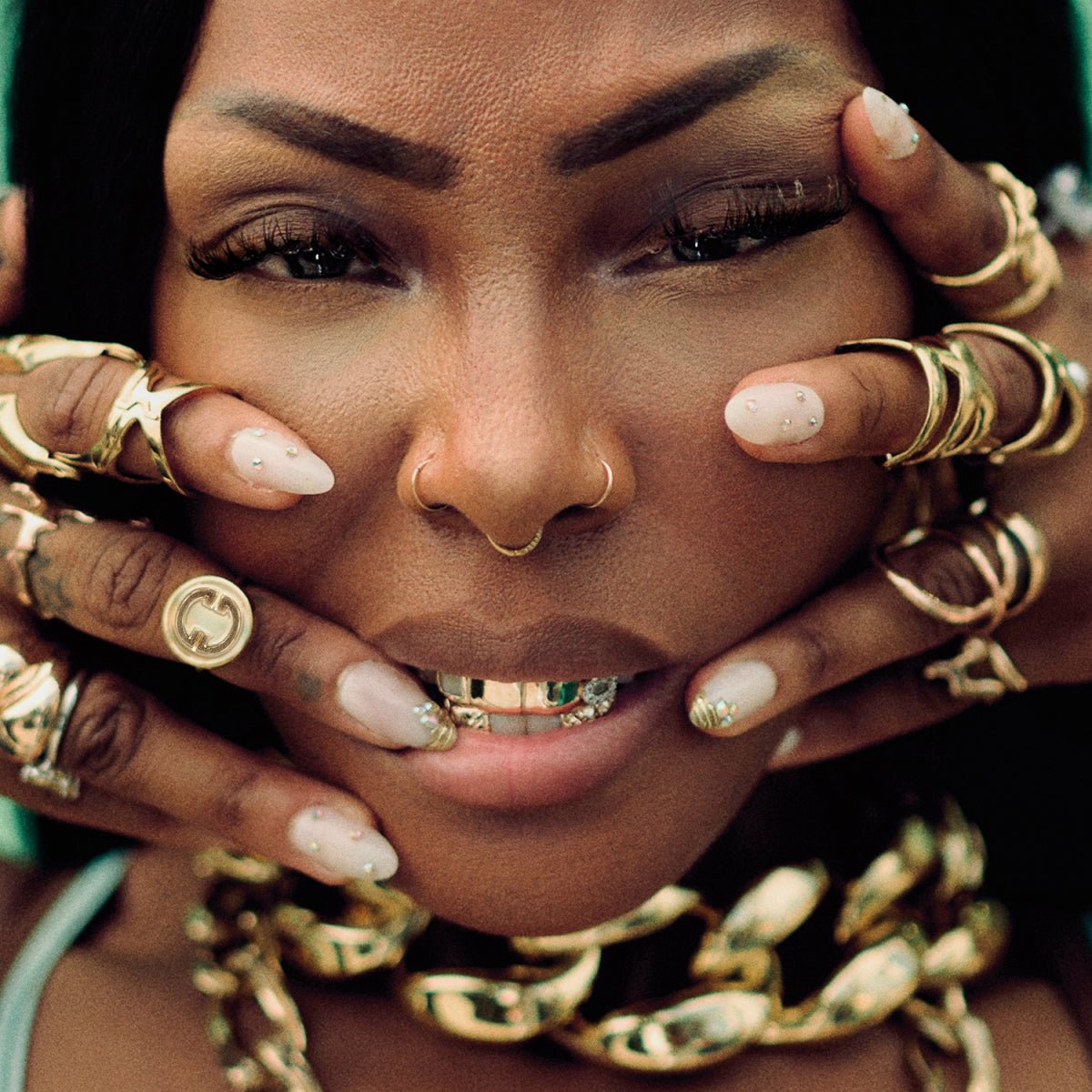
Dawn Richard did not leave the machinery of pop to disappear. She used the room it gave her to become an architect. On creole culture, New Orleans is not a nostalgia filter. It is material: family, language, rhythm, grief, joy, brass, bounce, futurism and the right to imagine home differently.
The city is not a backdrop
Dawn Richard’s creole culture, released October 9 through Merge Records, finishes a New Orleans trilogy that began with New Breed in 2019 and continued with Second Line in 2021. Richard has described those earlier records as perspectives filtered through her father and mother. This one centers her own eye. The result is less “return to roots” than reclamation: a musician who has spent years moving through pop, electronic music, R&B, chamber-like collaborations and self-directed visual worlds deciding that New Orleans can hold all of that at once. The album’s guests make the point without turning the record into a guest list. Big Freedia opens the door. Anjelika “Jelly” Joseph, Tarriona “Tank” Ball, Durand Bernarr and Richard’s father Frank Richard appear across the project. Katalyst Collective shares executive-production duties with Richard. The album moves through R&B, soul, hip-hop, jazz and pop without treating those forms as separate neighborhoods that require passports. That matters because Richard’s career has repeatedly been described through transitions: Danity Kane, Diddy-Dirty Money, solo artist, independent artist, experimental collaborator. But the more useful way to read the last decade is construction. She has been building a language large enough to hold every version of herself.
PULL QUOTE: Dawn Richard did not escape the machine to become smaller. She left room to become architectural.
Independence became architecture
The cliché says artists leave the major-label system to gain “creative freedom.” That phrase is too clean. Freedom still requires infrastructure: financing, collaborators, distribution, artwork, marketing, touring, administration and the patience to keep making work when the old machine is no longer providing the room. Richard’s post-major-label catalog makes independence look less like escape and more like a design problem. She has self-released music, moved between labels and collaborators, directed visual work and continued stretching what Black Southern electronic and R&B authorship can look like. Merge’s own biography emphasizes that she chose to self-release after her group years and made refusing industry limits part of the point. On creole culture, that independence folds back into family and place. “Enough,” according to Richard’s album announcement, is about rejecting the belief that worth has to be earned. That idea lands differently after two decades in an industry that often converts worth into chart position, access, budgets and visibility.
Thanksgiving without the postcard
That makes Richard the right center for G.U.M.M.’s Thanksgiving issue. Gratitude does not have to mean pretending the road was easy. It can mean naming what survived. It can mean honoring parents without copying them. It can mean knowing which traditions fed you and still refusing to preserve them under glass. The visual language of creole culture is opulent for a reason. Gold, jewelry, close framing and the album’s luxurious presentation reject the idea that heritage must be sepia-toned to be authentic. YAMS’ September cover story similarly framed Richard’s culture as something passed down, remixed, protected and changed. That is a better Thanksgiving image than a table full of stock food: inheritance with movement. Richard’s New Orleans is not a museum exhibit. It is alive enough to argue with itself.
What gets passed forward
For G.U.M.M., “PASS IT FORWARD” is not a slogan pasted onto a holiday cover. It is the question underneath this whole issue. What did the artist inherit? What did the industry try to define for them? What did they protect? What did they transform? And what will somebody younger receive because they did the work? Dawn Richard’s answer is a world.

 Los Angeles | Redlands | Phoenix | Memphis | NYC
Follow us: @GemworkTV | Contact: info@gemwork.tv
