# Til The Tape Pops
- Link: https://gumm.digital/til-the-tape-pops/
- Published: 2026-05-02T17:21:40-07:00
- Author: M. Baaka
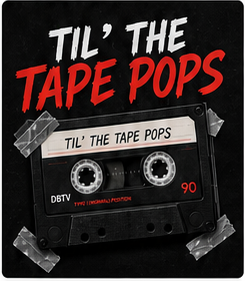
Til The Tape Pops Podcast Eps 35 | LoFi, Beats & Eats
May, 18th 2020 | 1:20:56 | ⌊🎧⌉ 3,123 listens | [](https://gumm.digital/wp-content/uploads/2026/05/mixcloud-logo.png)
We rewind to the Gloden Era of Boom Bap with head knocking beats, mixed with R&B
Soul & Kwatio. From Hip-Hop to Slow Jams , this one’s for the real heads.
[ Listen on Mixcloud ](https://www.mixcloud.com/TilTheTapePops/)
Side ATil’ The Tape Pops · Current FeatureTTTP / ARC-001
The Architects
## J Dilla
Detroit • Producer • MC • Innovator
### The Swing That Changed the Grid
J Dilla helped redefine how programmed drums could feel. His timing, sampling, restraint,
and sense of groove influenced generations of producers across underground hip-hop,
neo-soul, beat culture, and lo-fi production.
*
#### Rhythm
* Loose timing and humanized drum placement without losing forward motion.
*
#### Sampling
* Unexpected chops, source choices, and re-contextualized fragments.
*
#### Legacy
* A production vocabulary that still echoes through modern beat culture.
[Explore the Deep Dive](https://gumm.digital/til-the-tape-pops/#REPLACE-DEEP-DIVE-URL)
[ Watch](https://www.youtube.com/playlist?list=PLE5DAEAE863C3C6E9)[Listen on Spotify](https://open.spotify.com/artist/0IVcLMMbm05VIjnzPkGCyp)
Til’ The Tape PopsC-90
Jay DeeDetroit / MI
A1 — RhythmA2 — SamplingA3 — Legacy
Source · J Dilla’s AKAI MPC 3000 Limited Edition · Smithsonian, CC0
Up next in the archive
[Press photo — Jedi Mind Tricks
Next Architect
### Jedi Mind Tricks
Dark Boom Bap, Independent Power, Cinematic Production
[Press photo — Boards of Canada
The Tape Explorers
### Boards of Canada
Memory, Tape Decay, and Analog Atmosphere
Photos — Jedi Mind Tricks: public domain. Boards of Canada: Angular / Wikimedia
Commons, CC BY 2.0. J Dilla’s MPC 3000: Smithsonian, CC0.
### **How it started…**
---
# Til’ The Tape Pops: The Story Behind the Sound
**Created May 2, 2020**
**A labor of love born during the pandemic, built to give
music its context.**
Til’ The Tape Pops was created on May 2, 2020, at a time when the world felt paused,
uncertain, and disconnected.
The streets were quiet. Stages were closed. People were inside, trying to make sense
of a moment none of us had ever lived through before. Music became one of the few
things that still moved freely. It traveled through speakers, livestreams, playlists,
late-night conversations, and whatever people could create from home.
Out of that stillness, **Til’ The Tape Pops was born.**
What started as boredom quickly became a labor of love — a show built around music,
memory, context, and the people behind the sound.
---
## [[The Beginning
At first, the idea was simple: dig through music, revisit records, talk about artists,
and share the kind of details that do not always make it into the mainstream conversation.
But the more the show developed, the clearer the purpose became.
Til’ The Tape Pops was never meant to be just another playlist or background stream.
It was created for listeners who wanted more than the record. It was for people
who heard a song and asked questions.
Who made this?
Where did it come from?What was happening around it?Who were the
people behind the music?What part of the story did we miss?
That curiosity became the foundation of the show.[](https://gumm.digital/wp-content/uploads/2026/04/DBTV-Long-Slab_.bannerpng-scaled.jpg)
> **Anybody can play songs. Til’ The Tape Pops was created to tell the story behind
> them.**
---
## The Week It Began
Til’ The Tape Pops was born during a week when the country was caught between fear,
fatigue, isolation, and the pressure to reopen.
By the end of April 2020, the United States had crossed more than **1 million confirmed
COVID-19 cases**, while the reported death toll had passed **60,000**. The pandemic
was no longer something people were watching from a distance. It had changed daily
life, closed venues, interrupted work, separated families, and forced people to
rethink how community could even exist when gathering was no longer safe.
At the same time, the country was divided over what should happen next. Some states
were beginning to reopen parts of their economies, while others were still extending
restrictions and warning people to stay cautious. Businesses, artists, workers,
venues, and families were all trying to figure out what survival looked like in
real time.
The economy was also falling hard. Just days after TTTP was created, the U.S. Bureau
of Labor Statistics reported that April 2020 had brought a loss of **20.5 million
jobs**, with unemployment rising to **14.7 percent** — numbers that showed how deeply
the pandemic had disrupted everyday life.
So when Til’ The Tape Pops started on May 2, 2020, it did not arrive in a normal
moment.
It came out of a strange pause.
People were stuck inside. Venues were closed. Artists were separated from their
audiences. DJs, musicians, writers, selectors, and music lovers were all trying
to stay connected to culture without the usual rooms, stages, record shops, bars,
studios, and conversations that helped culture breathe.
Music became one of the few things that could still move freely.
It moved through headphones, livestreams, group chats, playlists, old records, digital
crates, and late-night conversations. Inside that atmosphere, TTTP became more than
something to do. It became a way to stay connected to music when the world around
the music had gone quiet.
Later that same month, the killing of George Floyd on May 25, 2020, would ignite
protests across the United States and around the world, deepening the national conversation
around race, power, visibility, policing, and who gets to tell the story.
Looking back, that matters.
Because Til’ The Tape Pops was always about more than playing records. It was about
context. It was about asking what was happening around the sound, who was behind
it, and what stories needed more room to be heard.
The show was born in a moment when the world was asking bigger questions — and TTTP
became one small way to answer through music, memory, and truth.
---
## A Different Kind of Music Show
Til’ The Tape Pops was built to inform, not just entertain.
The goal was to give people something to carry alongside the music: facts, backstories,
overlooked perspectives, and context that might not be widely known.
Maybe someone had heard the artist before, but never knew their journey. Maybe they
had met the artist through us, but did not know what shaped them. Maybe they thought
they knew the song, the era, or the scene — until the show opened up another side
of the story.
That was the point.
TTTP created space for the details. The names behind the names. The history behind
the hook. The people behind the movement. The moments that made the music matter.
---
## Born During a Strange Time
The timing mattered.
In May 2020, people were isolated, restless, and searching for connection. The pandemic
had changed how people gathered, how artists worked, and how listeners discovered
music. In-person shows were gone. Conversations moved online. Discovery became more
personal, more digital, and more intentional.
For a lot of people, music became a way to stay grounded.
Til’ The Tape Pops grew out of that atmosphere. It was a response to the silence.
A way to stay connected to culture when the usual spaces for culture had been taken
away.
It started from boredom, but it did not stay there.
It became a way to document, discover, and explain what was happening behind the
sound.
> **The music hits different when you know the road it traveled.**
---
## More Than a Playlist
A playlist can introduce you to a song.
Til’ The Tape Pops wanted to introduce you to the world around the song.
The show became a place to hear music and also understand the people, decisions,
eras, and circumstances that helped shape it. It gave listeners a point of view
they could carry with them — something deeper than a title, a name, or a familiar
hook.
Because music is never just sound.
It is memory.
It is history.It is personality.It is struggle.It is timing.It is
community.It is somebody’s story.
Til’ The Tape Pops was created to honor that.
---
## The Mission
At its core, Til’ The Tape Pops is about giving music context.
It is about making sure the stories do not disappear. It is about helping listeners
understand that every artist has a road, every record has a reason, and every sound
comes from somewhere.
The show was created for the heads who care about the backstory. The listeners who
want to know who was in the room, what was happening at the time, what the artist
was trying to say, and why a piece of music still matters.
It is about the facts people may not know. The point of view they may not have heard.
The missing pieces that make the music hit different.
> **Til’ The Tape Pops started in isolation, but it was always about connection.**
---
## The Road to Gemwork
Years later, the same instinct that created Til’ The Tape Pops helped shape the
larger vision behind Gemwork.
Because discovery should not stop at hearing something good.
It should lead somewhere.
It should connect listeners to artists.
It should connect artists to opportunity.
It should connect culture to documentation.It should connect people who care about
music to the stories that make the music matter.
Til’ The Tape Pops became one of the early sparks for that bigger idea — a belief
that music discovery should have depth, direction, and purpose.
What began as a show created during the pandemic became part of a larger mission:
to build spaces where artists, listeners, selectors, storytellers, and culture can
meet.
---
## Closing
Til’ The Tape Pops was created from boredom, built with love, and carried forward
by curiosity.
It started during a time when the world was shut down, but the need for connection
was wide open. It gave people a way to listen deeper, ask better questions, and
understand more about the artists and sounds moving through their speakers.
At its heart, TTTP is not just about playing music.
It is about the people behind it.
The moment around it.The facts you may not have
known.The perspective you may not have heard.The story that makes the music hit
different.
**Til’ The Tape Pops is the story behind the sound.**
---
## Want to hear the story behind the sound?
Listen to Til’ The Tape Pops and tap into deep cuts, artist backstories, overlooked
history, and music conversations that connect the dots.
**Button:** Listen on Mixcloud
**Secondary Button:** Explore DNKYBongs TV
Show Somebody: